2026 24 Hours of Le Mans Preview: Ferrari Defends, Seven Manufacturers Battle at La Sarthe
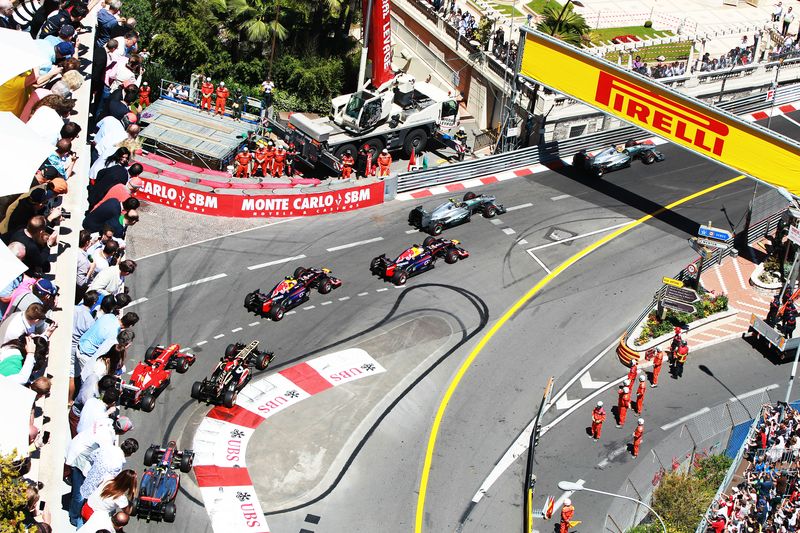
The 2026 24 Hours of Le Mans takes place June 13-14 at the Circuit de la Sarthe in France. Ferrari enters as defending champion after back-to-back wins, but faces the deepest Hypercar field in modern history: Toyota, Porsche, Peugeot, Cadillac, BMW, and Lamborghini are all confirmed. The race is part of motorsport's Triple Crown and edges closer to the centennial milestone of endurance racing's most iconic event.
Why Le Mans Still Gives Me Chills Every Single Year
I still remember the first time I watched Le Mans. I was thirteen, up past midnight on a grainy stream, watching headlights carve through the darkness on the Mulsanne Straight. I didn't fully understand the strategy, the tire compounds, or the fuel calculations. But I understood this: those cars were going to race through the entire night, and something about that felt profoundly dramatic in a way no other sporting event could match.
Twenty years later, I still set my alarm for the start. I still stay up for the night stints. And I still get that same tightness in my chest when the sun comes up over La Sarthe and you realize these teams have been pushing for fourteen hours straight with ten more to go. There is nothing else like it in motorsport, and honestly, nothing else like it in all of sports.
The 24 Hours of Le Mans is one-third of the Triple Crown of motorsport — alongside the Monaco Grand Prix and the Indianapolis 500 — and I'd argue it's the most demanding of the three. Monaco tests precision, Indy tests speed. Le Mans tests everything: speed, reliability, strategy, driver endurance, and the sheer will to keep going when your body is begging you to stop.
The 2026 Hypercar Class: Seven Manufacturers, One Trophy
Let me paint the picture of how stacked this year's grid is. We have seven major manufacturers in the Hypercar class: Toyota, Ferrari, Porsche, Peugeot, Cadillac, BMW, and Lamborghini. Seven. I've been following endurance racing since the early 2010s, and there was a time when Toyota was basically racing alone in the top class. Those days feel like ancient history now.
The Hypercar regulations have done exactly what the ACO and FIA intended — they've made Le Mans irresistible for manufacturers. The cost cap is manageable, the technical freedom is sufficient to differentiate, and the marketing value of winning Le Mans remains unmatched. When your road car brand can say "we won the 24 Hours of Le Mans," that means something to buyers. It always has.
Here's my honest take on the competitive landscape heading into June:
- Ferrari: The defending champion. Back-to-back wins have proven the 499P is no fluke. They've had the best race-day execution of any team since their return, and their driver lineups are deep. They're the team to beat.
- Toyota: Always fast, always reliable, but they've been unable to close the deal against the new wave of competition. The GR010 Hybrid is mature and well-understood, which is both an advantage and a limitation.
- Porsche: The 963 had a rough debut season but has steadily improved. Porsche has more Le Mans wins than anyone in history, and they know how to peak for this race.
- Peugeot: The 9X8 has been the perennial underdog. If they've finally sorted their reliability issues over the winter, they could be a dark horse.
- Cadillac, BMW, Lamborghini: All relatively new to the Hypercar party. A podium from any of them would be a major statement.
The Night Is Where Le Mans Becomes Something Else Entirely
If you've never watched the night stint at Le Mans, I need you to understand what you're missing. Around 10 PM local time, the sun drops behind the trees along the Mulsanne, and the entire character of the race changes. The cars become streaks of light. The engine sounds echo differently in the cool air. Drivers who were fighting for position in daylight are now navigating a 13.6-kilometer circuit in near-darkness, trusting their headlights and their instincts at speeds exceeding 330 km/h on the straights.
I watched the 2023 night stint from my couch at 3 AM, wrapped in a blanket, and I genuinely could not look away. There's a particular shot the broadcast always gets — a wide angle from the Porsche curves showing a train of Hypercars threading through the esses with nothing but their LED headlights visible against the black — that is, to me, the single most beautiful image in all of motorsport.
The night is also when Le Mans breaks hearts. Mechanical failures that would be a quick pit stop in daylight become race-ending disasters in the dark. Safety car periods compress the field. Leaders can lose minutes in a single stop. I've seen championship-caliber efforts evaporate at 4 AM because of a single turbo failure or a slow puncture noticed one lap too late.
Ferrari's Three-Peat Bid: Can Anyone Stop Them?
Ferrari's back-to-back Le Mans wins in 2024 and 2025 were emotional for anyone who remembers the decades Ferrari spent away from prototype racing. Their return with the 499P wasn't supposed to be this immediately dominant. They weren't supposed to win on their first full season back. And they definitely weren't supposed to repeat.
But here we are, and now Ferrari is gunning for a three-peat. In endurance racing history, three consecutive overall victories at Le Mans is extraordinarily rare. If Ferrari pulls it off, it would cement the 499P as one of the great Le Mans cars and validate their entire Hypercar program in a way that transcends any single race result.
Can they be stopped? Absolutely. The competition has gotten stronger every year. Toyota has been refining their package relentlessly. Porsche's institutional knowledge of this circuit is unmatched. And the wild card is always weather — Le Mans in June can throw rain at you with zero warning, and a wet Mulsanne Straight at 2 AM is the great equalizer.
What makes Le Mans special isn't just the speed or the endurance. It's the fact that anything can happen in 24 hours. The fastest car doesn't always win. The most reliable one does.
How to Watch the 2026 24 Hours of Le Mans
The race begins at 4:00 PM local time (CET) on Saturday, June 13, and finishes at 4:00 PM on Sunday, June 14. Qualifying and practice sessions run throughout the preceding week, with Hyperpole — the shootout for the top grid positions — on Thursday evening.
My personal advice for first-time viewers: don't try to watch all 24 hours. Pick three key windows — the start (first two hours), the night stint (midnight to 3 AM local), and the final three hours on Sunday morning. Those are the moments where the drama concentrates. Between those windows, check in every hour or two and let the race breathe. Le Mans rewards patience.
If you can ever make the trip to La Sarthe in person, do it. The atmosphere is unlike any other sporting event I've attended. Fans camp along the circuit, the food is incredible (it's France, after all), and the sound of Hypercars passing your spot at 3 AM while you're standing in a field with a coffee and ten thousand other fans who are just as obsessed as you — that's a core memory waiting to happen.
More from Daily Flash Byte
2026 US Open Golf Preview: Shinnecock Hills Returns Toronto Maple Leafs and the 2026 NHL Draft LotteryFrequently Asked Questions
When is the 2026 24 Hours of Le Mans?
The race takes place June 13-14, 2026, at the Circuit de la Sarthe in Le Mans, France. It starts at 4:00 PM local time on Saturday and finishes at 4:00 PM on Sunday.
Which teams are competing in the 2026 Le Mans Hypercar class?
Toyota, Ferrari, Porsche, Peugeot, Cadillac, BMW, and Lamborghini are all confirmed for the 2026 Hypercar class, making it one of the most competitive fields in Le Mans history.
Who won the 2025 24 Hours of Le Mans?
Ferrari won the 2025 edition, securing back-to-back victories. They enter 2026 as defending champions aiming for a historic three-peat.
What is the Triple Crown of motorsport?
The Triple Crown consists of the Monaco Grand Prix, the Indianapolis 500, and the 24 Hours of Le Mans. Le Mans is considered the ultimate endurance test, requiring teams to race for a full 24 hours through day and night.
Is the 2026 Le Mans the 100th running of the race?
The 2026 edition brings the race closer to its centennial milestone. The first 24 Hours of Le Mans was held in 1923, and the 100th running is approaching, with the exact edition number accounting for years the race was suspended.