Why Is $12 Million a Concerning Number for Star Wars?
Let me be blunt: $12 million in Thursday previews for a Star Wars movie is bad. Not "relative to The Force Awakens" bad — just objectively below where this franchise has historically opened. The previous low was Solo at $14.1 million, and that film went on to become the only Star Wars movie that unambiguously lost money at the box office. Now Mandalorian and Grogu has undercut even that number by over $2 million.
For perspective, The Force Awakens pulled $57 million in Thursday previews alone. The Last Jedi did $45 million. Even The Rise of Skywalker, which arrived amid a polarized fanbase, managed $40 million. The trajectory has been a steady decline in the urgency people feel to show up on opening night for a Star Wars title, and the Mandalorian's first theatrical outing has continued that downward slide.
Does a Streaming-to-Theatrical Jump Hurt Opening Night?
I think there's a real psychological barrier Disney underestimated here. For three seasons, Mandalorian fans watched this show at home on Disney+. That's where they built their relationship with Din Djarin and Grogu. Asking those same viewers to drive to a theater, pay $15-20 per ticket, and show up on a Thursday night is a fundamentally different ask — and the preview number suggests a lot of them decided to wait.
I watched the first two seasons of The Mandalorian on my couch at midnight when new episodes dropped. There's an intimacy to that experience. You're in your own space, on your own schedule, Baby Yoda sipping soup while you're eating leftovers. Translating that energy into a theatrical event requires a level of spectacle that justifies leaving the couch, and based on what I've seen from early screenings, the movie delivers visually — but the habit loop was already set.

Can the Memorial Day Weekend Save the Numbers?
The $80-100 million domestic projection for the full opening weekend is actually reasonable, even with soft Thursday previews. Memorial Day weekend is historically strong for blockbusters — families are off work, kids are out of school, and the long weekend gives a film an extra day of earnings. If Mandalorian and Grogu can pull the higher end of that range, it'll land somewhere between "fine" and "good enough."
The $165 million budget is doing a lot of heavy lifting here. Previous Star Wars theatricals operated on $200-275 million budgets. By keeping costs lower, Disney built in a wider margin of safety. A $100 million domestic opening, combined with $160 million global, puts the film on a trajectory where $400-500 million worldwide makes it profitable. That's achievable. Not guaranteed — but achievable, especially if word of mouth is strong through the holiday.
What Does the Cast Bring to the Big Screen?
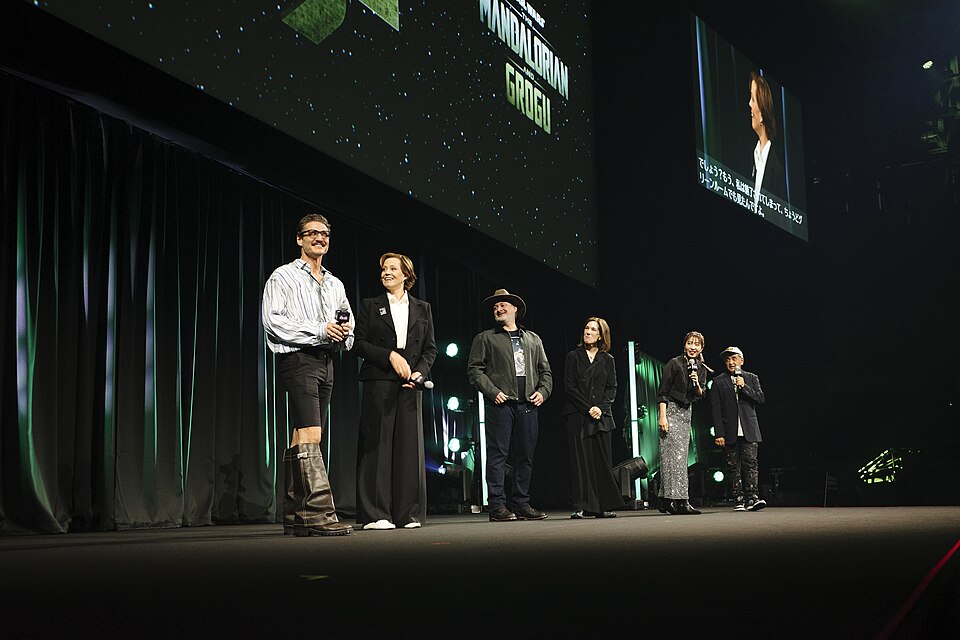
Pedro Pascal has become one of the most bankable actors in Hollywood, but there's an irony to his Mandalorian role: he's behind a helmet for most of it. The movie reportedly gives him more face time than the series ever did, which should help drive emotional resonance on the big screen. Jeremy Allen White as Rotta the Hutt is the kind of left-field casting that either becomes iconic or becomes a meme — there's no middle ground with a Carmy-to-Hutt pipeline.
Sigourney Weaver's involvement is genuinely exciting. She brings a gravitas to sci-fi that few actors can match, and her presence signals Disney wanted this movie to feel weightier than a long TV episode. Jon Favreau directing is the safe, steady hand — this is the guy who launched the MCU with Iron Man and created The Mandalorian series in the first place. He knows this material cold.

Is This a Solo Repeat or Something Different?
The Solo comparison is inevitable but not quite fair. Solo had multiple problems that compounded: a troubled production with a director swap, a release date sandwiched between Avengers: Infinity War and Deadpool 2, and a character recast that divided fans before the first trailer dropped. Mandalorian and Grogu has none of those production issues. The show is beloved. Grogu is a cultural phenomenon. The creative team is intact.
What it does share with Solo is the question of demand. Star Wars used to be an automatic event. People would clear their schedules, buy tickets weeks in advance, and treat opening night like a holiday. That era is over. The franchise has saturated its audience through Disney+ shows — Mandalorian, Ahsoka, Andor, Obi-Wan, Acolyte, Skeleton Crew — to the point where another Star Wars story doesn't feel urgent. It feels routine.
What This Means for Disney's Star Wars Strategy Going Forward
Disney is watching this weekend very closely. They have multiple Star Wars theatrical projects in development, and the Mandalorian and Grogu's performance will directly influence how aggressive they are with those plans. If the film legs out to $400 million worldwide, the strategy of converting TV IP to theatrical will get a green light for more projects. If it stalls below $300 million, expect Disney to rethink the pipeline entirely.
The deeper question is whether Star Wars can ever recapture the event status it had from 2015 to 2019. Five films in five years — plus a constant stream of Disney+ content — may have permanently shifted how audiences relate to the franchise. It went from "once every few years, and the whole world stops" to "there's always something Star Wars, and I'll get to it eventually." The Mandalorian and Grogu's opening weekend won't answer that question definitively, but $12 million in Thursday previews is a data point that should keep Lucasfilm executives up at night.