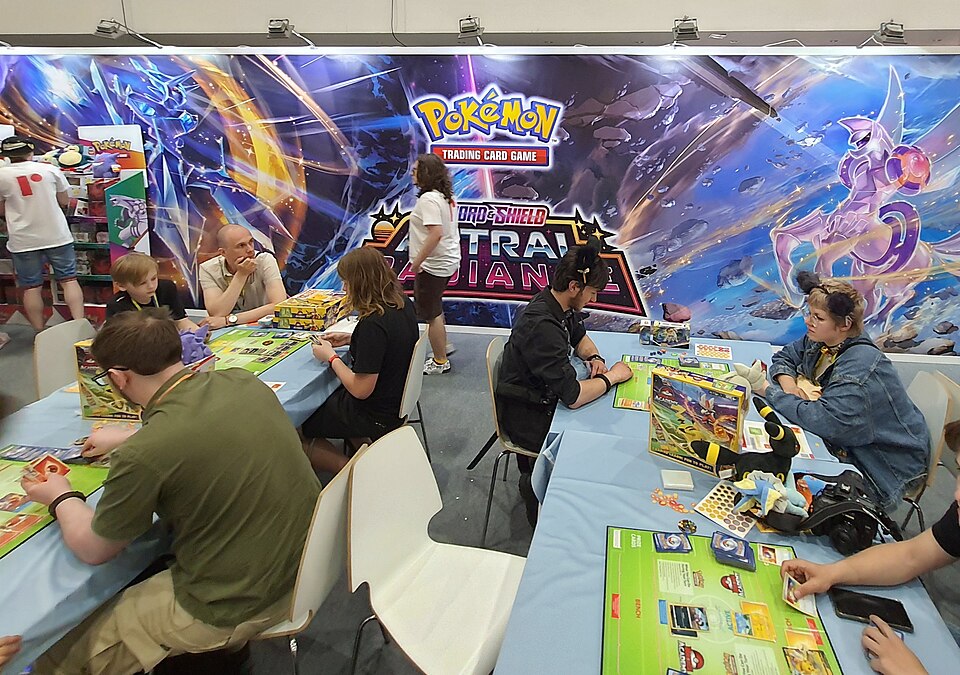

How the Pokémon TCG Actually Works
When I first opened a booster pack back in the late 1990s, I had no idea what any of the numbers on the cards meant. I just thought Charizard looked cool. It took me an embarrassingly long time to realize that the Pokémon TCG is a genuinely deep strategy game, not just a collectible hobby — though it is that too. If you are starting from scratch in 2026, here is the core loop you need to understand.
Two players face each other, each with a 60-card deck. You start by placing a Basic Pokémon face-down as your Active Pokémon and up to five more on your Bench. You draw six Prize cards from your deck — every time you knock out an opponent's Pokémon, you take one (or two for certain powerful Pokémon ex and Pokémon VSTAR). The first player to take all six Prize cards wins. Alternatively, you win if your opponent has no Pokémon left in play or cannot draw a card at the start of their turn.
Each turn follows a simple structure: draw a card, do as many actions as you want (play Pokémon from your hand, attach one Energy card, use Trainer cards, evolve Pokémon), and then attack. That is it. The beauty is in the decisions you make within that framework — when to commit resources, when to retreat your Active Pokémon, when to hold cards in hand for a future combo.
The Three Card Types Explained
Every card in the Pokémon TCG falls into one of three categories, and understanding what each does is the foundation of everything else.
Pokémon Cards
These are your fighters. Basic Pokémon can be played directly from your hand. Stage 1 Pokémon evolve from Basics, and Stage 2 Pokémon evolve from Stage 1s. Evolution takes one turn per stage, so planning your evolution lines is critical. The current format features several power tiers: regular Pokémon, Pokémon ex (which give up two Prize cards when knocked out but have stronger attacks and more HP), and Tera Pokémon ex (with unique Terastallization abilities). Most competitive decks run 12–16 Pokémon.
Trainer Cards
Trainers are your strategic toolkit. They break into three subtypes: Items (play as many as you want per turn — draw cards, search your deck, heal damage), Supporters (powerful effects but limited to one per turn — Professor's Research, Boss's Orders, Iono), and Stadiums (persistent effects that stay in play until replaced). Trainer cards are the backbone of consistency. A well-built deck runs 28–34 Trainers. I cannot stress this enough: Trainer cards win games. Your Pokémon deal the damage, but Trainers set up the situations where that damage matters.
Energy Cards
Energy powers your Pokémon's attacks. There are nine Basic Energy types (Fire, Water, Grass, Lightning, Psychic, Fighting, Darkness, Metal, and Fairy) plus Special Energy cards with bonus effects. You can attach one Energy per turn from your hand to one of your Pokémon. Most decks run 10–14 Energy cards, sometimes fewer if they have Energy acceleration effects from Trainer cards or Pokémon Abilities.
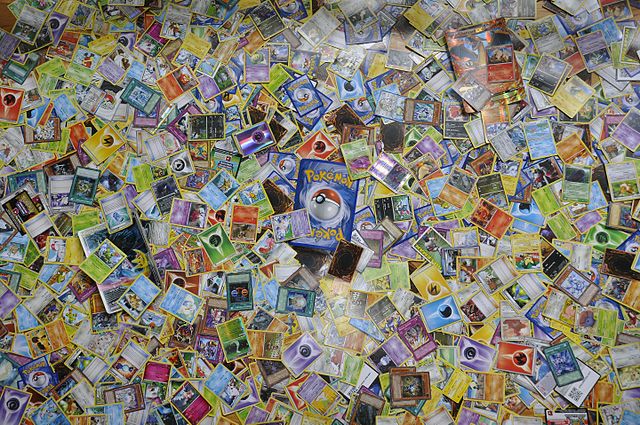
Photo: Jarek Tuszyński / CC BY-SA 4.0

Starter Products Compared: What Should You Actually Buy?
This is where most beginners waste money. You do not need to rip open 50 booster packs to start playing. In fact, that is one of the worst ways to build a playable deck. Here is an honest breakdown of every entry-level product available in 2026.
| Product | Price (USD) | What You Get | Playable Out of Box? | Best For |
|---|---|---|---|---|
| Battle Academy Best for Beginners | $30–35 | 2 complete 60-card decks, play mat, tutorial guide, damage counters | Yes — two decks ready to play | Absolute beginners, families, learning the rules |
| League Battle Deck Best Value | $15–25 | 1 competitive 60-card deck with key staple Trainers | Yes — tournament viable with minor upgrades | Players who know the basics, budget competitors |
| Elite Trainer Box (ETB) | $45–50 | 9 booster packs, card sleeves, dice, storage box | No — random cards, not a deck | Collectors, supplementing an existing deck |
| Booster Bundle | $25–30 | 6 booster packs | No — random cards only | Supplementing a collection, chasing specific cards |
| Single Booster Pack | $4–5 | 10 random cards | No | Casual fun, adding to existing collection |
| TCG Pocket (App) | Free | Digital card collection, daily free packs, PvP battles | Yes — digital play only | Zero-cost entry, learning on mobile |
My recommendation: if you want physical cards, buy a League Battle Deck. At $15–25, you get a fully constructed deck with actual competitive staples like Professor's Research, Boss's Orders, and Nest Ball. The Charizard ex and Miraidon ex League Battle Decks from 2024–2025 are still excellent in 2026 and frequently available at game stores. If you want to learn with a friend or family member, the Battle Academy is the better pick because you get two decks and a guided learning experience.
Avoid buying booster packs as your first purchase. I made this mistake myself — I spent $50 on random packs, ended up with a pile of cards from different strategies that could not form a coherent deck, and felt like I had wasted my money. Boosters are great once you know what you are looking for, but terrible as a starting point.
Building Your First Deck: A Practical Framework
Deck building is where the Pokémon TCG transforms from a simple game into a deep strategic exercise. Here is the framework I use and recommend to every beginner.
Start with the 2-2-2 principle: pick one main attacker (your primary Pokémon line), one support Pokémon (something that draws cards or accelerates Energy), and one backup attacker. Build your Trainer line around consistency — you want to see your key cards every game, not just when you get lucky.
A solid beginner deck skeleton looks like this: 4 copies of your main Basic Pokémon (and 3–4 of its evolution if applicable), 2–3 support Pokémon, 4 Professor's Research or equivalent draw Supporter, 4 Nest Ball, 2–3 Boss's Orders, 2 Iono, 4 Ultra Ball, and 10–12 Energy. That accounts for about 35–40 cards. Fill the remaining slots with tech cards that counter common strategies in your local meta.
The single most important lesson in deck building is this: consistency beats power. A deck that executes its strategy every game will beat a deck with theoretically stronger cards that only comes together half the time. When I started competing at local league nights, I kept losing with my "perfect" deck until a more experienced player pointed out that I had too many one-of tech cards and not enough draw support. I cut five flashy Pokémon for four more Trainer cards and immediately started winning more.
Pokémon TCG Pocket: The Free Digital Entry Point
If you are not sure whether the Pokémon TCG is for you, Pokémon TCG Pocket is the zero-risk way to find out. This mobile app (available on iOS and Android) gives you free digital booster packs daily, lets you build and battle with digital decks, and has a streamlined rule set that teaches core concepts without overwhelming you.
TCG Pocket uses simplified rules — smaller decks, faster games — so it is not a 1:1 recreation of the physical game. But it teaches you the fundamental concepts: type matchups, evolution timing, Energy management, and Trainer sequencing. I have recommended it to at least a dozen people who were curious about the TCG, and every single one of them said it made the transition to physical cards much smoother.
For the full digital experience that mirrors physical rules exactly, Pokémon TCG Live is the official free-to-play desktop and mobile client. You can redeem code cards from physical booster packs to unlock the same cards digitally, which makes physical purchases feel more valuable since you essentially get two copies of everything.
Where to Play: Finding Your Local Community
The Pokémon TCG is fundamentally a social game, and the community is one of its greatest strengths. Here is where to find games.
Local game stores (LGS) are the heart of organized play. Most stores that carry Pokémon products run weekly Pokémon League nights — casual play sessions where beginners are explicitly welcome. Use the Pokémon Event Locator to find events near you. League nights are free at most stores and attract a mix of skill levels.
Sanctioned tournaments range from local League Challenges (entry fee typically $5–10) up through Regional Championships and the World Championships. You do not need to worry about tournaments when starting out, but knowing they exist gives you a competitive goal if that motivates you.
Online play through TCG Live and TCG Pocket means you can practice any time. I play two or three games on TCG Live most evenings after work just to test deck ideas before bringing them to my local league night. It is an invaluable testing ground.
How Much Does It Cost to Start?
One of the best things about the Pokémon TCG is that the floor is genuinely low. Here is a realistic budget breakdown for different levels of commitment.
Free: Download Pokémon TCG Pocket, play digitally, learn the game. Total cost: $0.
Budget entry ($15–35): Buy a League Battle Deck ($15–25) or Battle Academy ($30–35). Add card sleeves ($5–8) to protect your investment. You are now ready to play at local league nights. Total: $20–43.
Competitive starter ($50–80): League Battle Deck plus $20–40 worth of single cards purchased individually from your local store or online (sites like TCGPlayer or Cardmarket). This lets you upgrade your deck with specific cards you need rather than gambling on booster packs. Add sleeves and a deck box. Total: $55–85.
Fully competitive ($100–200): A complete meta deck built from singles. Top-tier decks in the 2026 Standard format typically cost $100–200 depending on which expensive cards they require. This sounds like a lot, but compared to other TCGs (Magic: The Gathering competitive decks often run $300–600), Pokémon is remarkably affordable.
Current Meta: Best Beginner-Friendly Decks in 2026
The Standard format in 2026 (Regulation G onward) has several decks that are both competitive and straightforward to pilot. If you are looking for a first competitive deck, these are strong starting points.
Charizard ex remains a powerhouse thanks to its raw damage output and relatively simple game plan: set up Charizard, accelerate Energy, hit hard. The League Battle Deck version is an excellent base.
Miraidon ex is the best aggressive deck for beginners. It is fast, consistent, and teaches you good habits about early-game tempo. Lightning-type acceleration from Miraidon's Ability means you are attacking on turn two almost every game.
Gardevoir ex rewards players who enjoy more complex decision-making. Its Psychic Embrace Ability lets you attach Psychic Energy from the discard pile, creating big damage swings. It has a higher learning curve but teaches excellent resource management.
If you want my personal recommendation: start with Miraidon ex. It is cheap, fast, and teaches you the most important skill in the Pokémon TCG — knowing when to be aggressive. I still bring a Miraidon deck to casual events because it is just fun to play, even after hundreds of games with it.