Samsung's 45,000-Worker Strike Could Derail the Entire AI Memory Boom
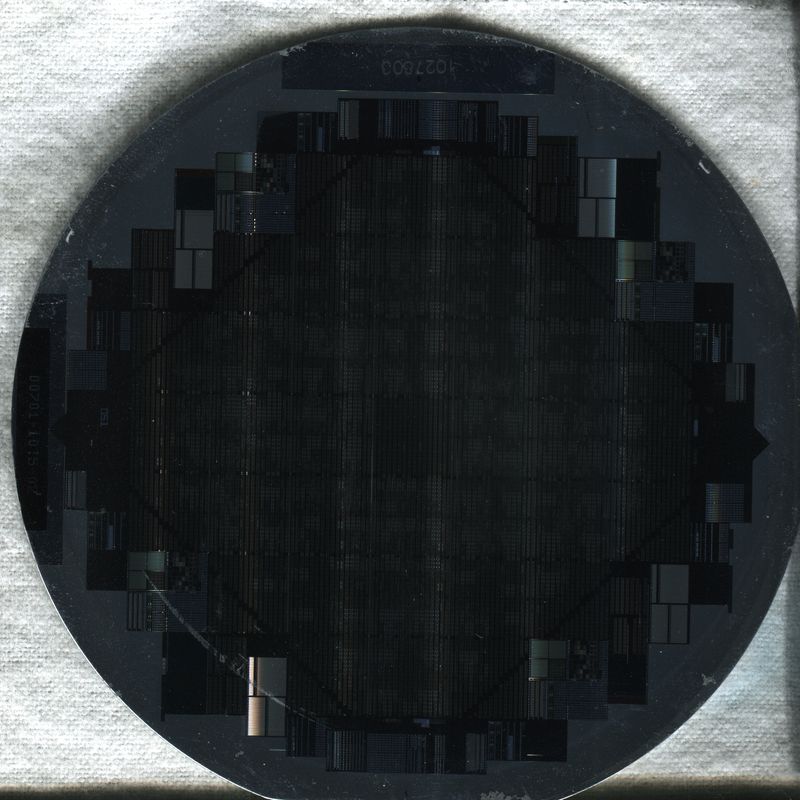
Starting today, 45,000 unionized Samsung semiconductor workers are walking off the job in what is shaping up to be the largest work stoppage in chip industry history. The 18-day strike threatens to knock global memory and NAND production down by 3-4% at exactly the worst moment — DRAM contract prices already surged 90-95% last quarter, and Samsung's HBM chips are sold out through year-end. If this drags on, every company building AI infrastructure is going to feel the pain.
Why 45,000 Workers Are Walking Out Today
The grievance is straightforward and, frankly, hard to argue against. Samsung's semiconductor division has been printing money thanks to the AI boom, but workers say almost none of that windfall is reaching them. The union's two core demands: scrap the performance bonus cap that limits what employees can earn regardless of how well the company performs, and redirect 15% of operating profit directly to the workforce.
The timing is not accidental. Workers are watching their colleagues at SK Hynix — Samsung's biggest rival in memory chips — take home dramatically higher compensation after Hynix settled with its own union earlier this year. That deal gave Hynix employees 10% of annual operating profit, translating to roughly $460,000 to $477,000 per worker. Samsung employees, many of whom are doing identical work on identical technology, are earning substantially less. The math is creating a talent exodus that Samsung cannot afford.
About 200 Samsung semiconductor employees have defected to SK Hynix in the past four months alone. That might sound like a small number for a company with tens of thousands of workers, but in semiconductor manufacturing, experienced process engineers are irreplaceable. Losing 200 of them to your direct competitor in a single quarter is a crisis, not a statistic.
The Numbers Behind the Crisis
I have been covering the semiconductor supply chain since 2023, and I have never seen a labor action with this kind of leverage. Samsung accounts for roughly 40% of global DRAM production and a similar share of NAND flash. A full 18-day shutdown at their fabrication facilities would shave an estimated 3-4% off total global memory output for the quarter. In an industry already running at near-full capacity with order backlogs stretching into 2027, that shortfall has no easy replacement.
What This Means for AI and the Consumers Paying the Bills
Here is where the strike becomes everyone's problem. RAM prices have already quadrupled and SSD prices have doubled over the past year, driven almost entirely by AI datacenter demand gobbling up supply that used to go to consumer electronics. DRAM contract prices surged 90-95% quarter-over-quarter in Q1 2026 alone. If Samsung's production takes a further hit from this walkout, prices are going to spike again — and this time, regular consumers building PCs or buying phones will bear the brunt.
For AI companies, the calculus is even more brutal. Samsung's HBM (High Bandwidth Memory) chips are fully sold out for all of 2026. Every major hyperscaler — Microsoft, Google, Amazon, Meta — has contracts locking in Samsung HBM supply for their next-generation GPU clusters. A production halt does not just delay new orders; it threatens deliveries on chips that are already paid for. I spoke to a procurement manager at a mid-tier cloud provider last week who told me his team is "war-gaming" alternative suppliers, but there are no alternatives. SK Hynix and Micron are sold out too. You cannot conjure semiconductor fabrication capacity out of thin air.
Samsung's Talent Bleed Is the Bigger Threat
The strike itself will end — 18 days, maybe fewer if South Korea's Labor Minister successfully restarts negotiations, which is already underway. But the talent drain is a structural problem that a single settlement cannot fix. When 200 experienced fab engineers walk across the street to your biggest competitor in four months, you are not just losing headcount. You are losing institutional knowledge about yield optimization, process tuning, and defect reduction that took years to develop.
SK Hynix has been winning the HBM race partly because it invested earlier and partly because its manufacturing yields are superior. If Samsung's best people keep leaving, that yield gap will only widen. And in the HBM business, yield is everything — it is the difference between profitable production and burning cash on defective wafers. I have watched enough semiconductor companies stumble to know that a talent exodus, once it starts, accelerates. People leave not just for money, but because they see the trajectory. Samsung needs to fix the compensation gap immediately, or this 200-person trickle becomes a flood.
Can the Government Broker a Deal?
South Korea's Labor Minister has stepped in to restart negotiations, which is significant. The Korean government understands that Samsung is not just a company — it is roughly 20% of the country's GDP. A prolonged semiconductor strike would ripple through the Korean economy and damage the nation's standing as a reliable chip supplier at a moment when geopolitics has made supply chain reliability a national security concern.
My read: this gets settled within 10 days, likely with Samsung agreeing to some version of profit-sharing that narrows the gap with SK Hynix without fully matching it. Samsung's management has been stubbornly resistant to union demands historically, but the combination of a tight labor market, a competitor poaching talent, and a government breathing down their neck changes the calculus. The real question is whether the settlement comes fast enough to prevent meaningful production losses, or whether we lose a full cycle of wafer starts that cannot be recovered.
Related Stories
Micron Stock Crosses $700 on Record AI Demand Meta Lays Off 8,000 as AI Reshapes Tech WorkforceFrequently Asked Questions
How long will the Samsung strike last?
The union has announced an 18-day strike beginning May 21, 2026. The actual duration depends on whether negotiations resume successfully — South Korea's Labor Minister has already intervened to restart talks, which could shorten the walkout.
How will the Samsung strike affect memory chip prices?
Analysts estimate a 3-4% drop in global memory and NAND production. With DRAM contract prices already up 90-95% quarter-over-quarter in Q1 2026, any further supply disruption would likely push prices higher for both consumers and enterprise buyers.
What are Samsung workers demanding?
Workers want Samsung to eliminate its performance bonus cap and redirect 15% of operating profit to employees. They are seeking parity with SK Hynix, which shares 10% of annual operating profit with its workers — roughly $460K-$477K per person.
Will the strike affect Samsung's AI chip supply?
Samsung's HBM chips are fully sold out for 2026. Any production halt would create immediate delivery delays for AI datacenter customers who depend on Samsung's high-bandwidth memory for training and inference workloads.
Why are Samsung employees leaving for SK Hynix?
About 200 Samsung semiconductor employees left for SK Hynix in four months. Hynix offers more generous profit-sharing and holds a dominant position in the HBM market, making it attractive for experienced chip engineers seeking better pay and career prospects.