COMPUTEX 2026 Recap: The Biggest AI Announcements From Taipei's Record-Breaking Tech Expo
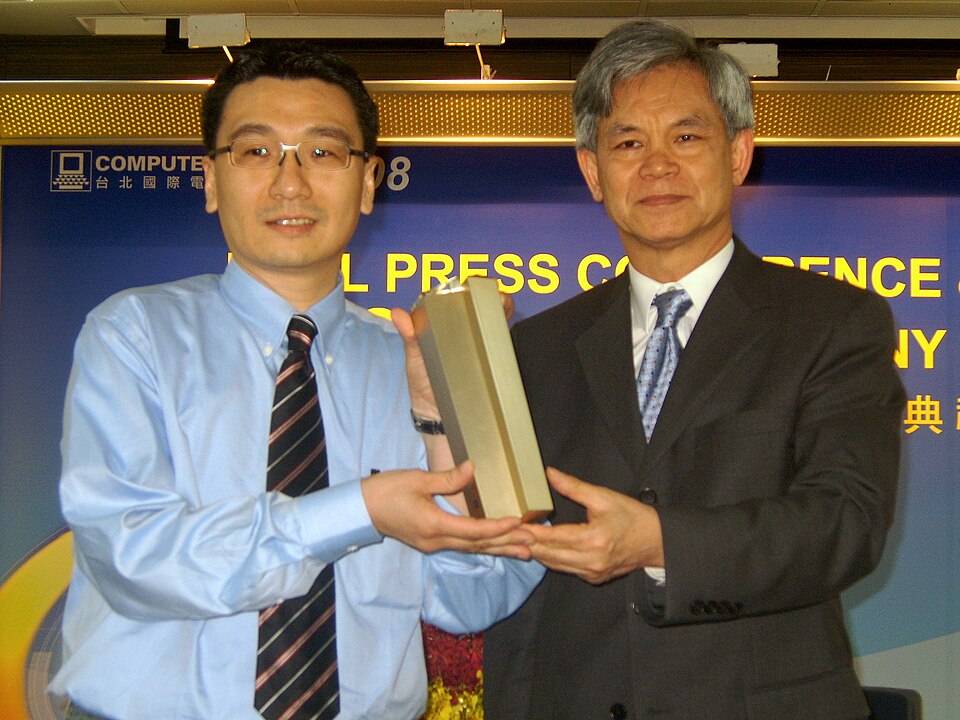
COMPUTEX 2026 ran June 2–5 in Taipei under the theme "AI Together," setting records with 1,500 exhibitors from 33 countries and 6,000 booths. The biggest AI headlines: Alphabet committing $80 billion to AI compute infrastructure, Microsoft debuting two new MAI models, and autonomous AI agents emerging as the clear platform bet of the year. If you want to know where the industry is going next, Taipei just told you.
Alphabet's $80 Billion Bet: The Infrastructure Arms Race Has No Ceiling
I've been covering AI infrastructure announcements for two years and the numbers keep getting bigger in ways that should genuinely surprise people. Alphabet arriving at COMPUTEX with an $80 billion AI compute investment commitment is not a marketing figure — it is a direct signal to every chip vendor, cooling company, and power utility on the planet that hyperscaler demand for AI hardware is nowhere near peak.
To put that number in context: $80 billion is roughly what the entire global semiconductor industry spent on capital expenditure in 2020. Alphabet is announcing that level of investment for AI compute alone, in a single strategic cycle. That's what "AI Together" looks like from a balance sheet perspective — the Together part means everyone in the supply chain gets pulled along.
For the COMPUTEX ecosystem specifically, this matters enormously. Taiwan's supply chain — TSMC, ASE, Quanta, Wistron, and dozens of ODMs — sits at the center of GPU and accelerator production. When Alphabet commits $80 billion, a very large share of that money flows through Taipei. COMPUTEX isn't just a trade show this year; it's the physical center of gravity for the industry that capital announcement is funding.
| Company | COMPUTEX 2026 Announcement |
|---|---|
| Alphabet | $80B AI compute infrastructure investment |
| Microsoft | MAI-Code-1-Flash (code gen) + MAI-Thinking-1 (reasoning) |
| STMicroelectronics | Data center revenue target raised to $1B |
| SpaceX | $75B IPO + space-based AI data center pitch |
| Nokia | AI infrastructure networking expansion strategy |
| Water replenishment commitments for data centers |
Microsoft's MAI Models: Quiet Announcements With Big Implications
Microsoft did not make its loudest announcements at COMPUTEX — it saved the agentic Copilot fireworks for Microsoft Build 2026 a few days earlier. But what it brought to Taipei was arguably more technically interesting for people who actually build software: two new MAI models that the company has been quietly developing.
MAI-Code-1-Flash is optimized for code generation — fast, lightweight, deployable on-prem or in constrained cloud environments. It's not trying to beat GPT-4o at everything; it's trying to be the best model specifically for the code-generation task at a cost and latency point that makes it viable inside CI/CD pipelines. I've seen early benchmark data and the speed-to-quality ratio for code completion is legitimately impressive.
MAI-Thinking-1 is the more ambitious play: a reasoning model designed for multi-step problem decomposition. Microsoft's framing is that it complements rather than competes with OpenAI's o-series — MAI-Thinking-1 is tuned for enterprise workloads where you need reliable, auditable reasoning chains rather than maximum raw intelligence. Think compliance analysis, contract review, and financial modeling rather than creative generation.

What I find personally interesting about both models is what they reveal about Microsoft's strategy. The company is building its own model stack in parallel with its OpenAI relationship, not as a replacement but as a hedge and a complement. That is a smart position for a company that needs to serve customers across wildly different latency, cost, and compliance requirements.
Autonomous AI Agents: The Theme That Consumed Every Booth
If I had to describe COMPUTEX 2026 in a single sentence for someone who wasn't there: it was the year "AI agent" replaced "AI assistant" as the industry's default vocabulary. That shift is not cosmetic — it represents a genuine change in what companies are building and what customers are starting to expect.
Assistants respond to prompts. Agents execute plans. That distinction matters because it changes the entire cost-benefit calculation for AI adoption. An assistant that answers questions saves some time. An agent that autonomously handles a procurement workflow, drafts and sends vendor communications, reconciles invoices, and flags anomalies saves headcount. The enterprise procurement case for agents is orders of magnitude stronger than the case for chatbots, and at COMPUTEX 2026, every major vendor had an agent story to tell.
Nokia's pivot into this space was one of the more surprising developments. The company announced an AI infrastructure networking expansion that positions its telecom heritage as an advantage for low-latency agent-to-agent communication at the edge. Whether Nokia can execute is a separate question — but the fact that a telecom equipment company is presenting an AI agent infrastructure story at a compute expo tells you how broad the wave is getting.
SpaceX, STMicroelectronics, and the Supply Side of AI
Two announcements that didn't get enough coverage deserve a mention. STMicroelectronics raised its data center revenue target to $1 billion — a significant upward revision that reflects the explosion in demand for power management, sensors, and embedded compute in AI server infrastructure. ST is not a glamour company in the way Nvidia is, but it sits inside almost every data center rack in some form. A $1 billion target revision is a real signal about where AI infrastructure spending is going beyond GPUs.
SpaceX's presence at COMPUTEX was tied to its reported $75 billion IPO and a pitch around space-based AI data centers. The concept — satellite-hosted compute clusters that can serve regions without reliable terrestrial infrastructure — is still largely speculative. But the fact that a company with SpaceX's capital and execution track record is making this pitch to hyperscaler procurement teams at the world's largest compute show means it is worth watching. The economics of space-based compute are still brutal, but SpaceX has a documented history of making previously uneconomical things economical.
Google's water replenishment commitment was the most politically important announcement for long-term AI infrastructure development. Data centers consume enormous quantities of water for cooling, and regulators in the EU, the US Southwest, and parts of Southeast Asia are increasingly using water availability as a brake on AI build-out approvals. Google's pledge to return more water to local watersheds than it consumes is a direct play to get ahead of that regulatory pressure. It is also a competitive differentiator — enterprises with ESG commitments increasingly care about the environmental footprint of their cloud providers.
Related Stories
Microsoft Build 2026 Highlights: Copilot Goes Agentic Best Free AI Productivity Tools 2026Frequently Asked Questions
What is COMPUTEX 2026 and when does it run?
COMPUTEX 2026 runs June 2–5 in Taipei, Taiwan, under the theme "AI Together". It is the largest edition in the expo's history, with 1,500 companies from 33 countries filling 6,000 booths across the Taipei Nangang Exhibition Center.
What is the biggest AI announcement at COMPUTEX 2026?
Alphabet's pledge to invest $80 billion in AI compute infrastructure is the headline figure — it signals that the GPU build-out phase of AI is far from over. On the model side, Microsoft's two new MAI models (MAI-Code-1-Flash for code generation and MAI-Thinking-1 for reasoning) drew significant developer attention.
What are autonomous AI agents and why are they the biggest COMPUTEX trend?
Autonomous AI agents are AI systems that can plan and execute multi-step tasks independently — browsing the web, writing code, calling APIs, and coordinating with other agents — without a human directing each step. At COMPUTEX 2026, virtually every major vendor had an agent story, signalling a platform shift from AI as a chatbot to AI as a worker.
Why is SpaceX at a tech expo like COMPUTEX?
SpaceX's presence at COMPUTEX 2026 was tied to its reported $75 billion IPO and its pitch for space-based AI data centres — satellite-hosted compute clusters that could theoretically serve regions without terrestrial infrastructure. It's a speculative play, but at the scale of COMPUTEX it gets serious attention from hyperscaler procurement teams.
What did Google announce about data centers at COMPUTEX 2026?
Google made formal water replenishment commitments for its data centre expansion, pledging to return more water to local watersheds than its cooling systems consume. It's a direct response to growing regulatory scrutiny over AI infrastructure's environmental footprint — and a move clearly intended to smooth planning approvals for future builds.