Microsoft Build 2026: Copilot Gets Agentic, Azure AI Foundry Goes Big, and Everything Else That Matters
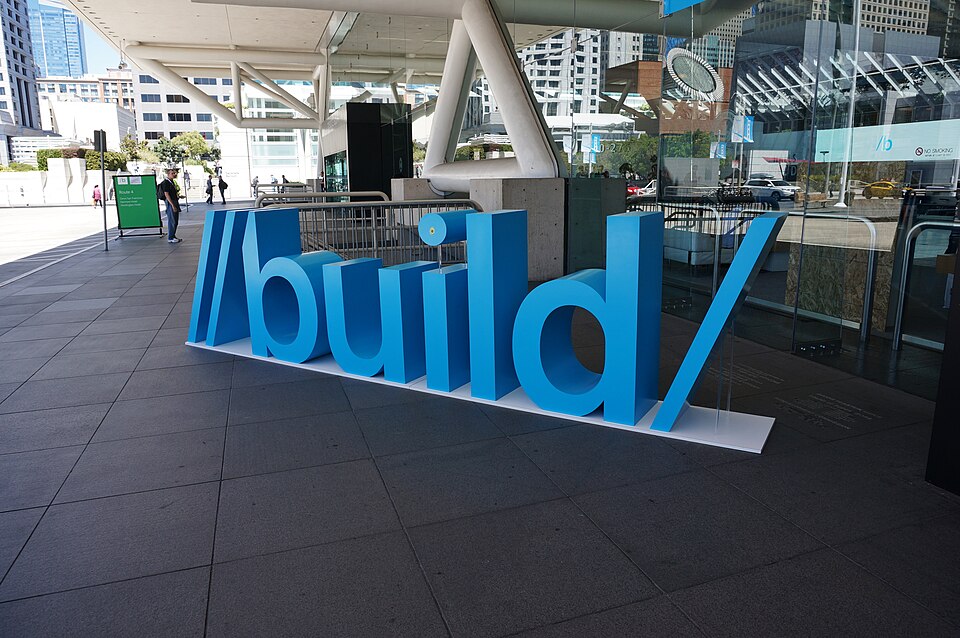
Live Microsoft Build 2026 opened today in San Francisco with two transformative announcements: GitHub Copilot now operates in a fully agentic mode capable of executing complex, multi-step coding tasks autonomously, and Azure AI Foundry has received a sweeping expansion making it the most comprehensive enterprise AI development platform Microsoft has ever shipped. With Apple WWDC still six days away, Microsoft is not waiting its turn.
GitHub Copilot's Agentic Leap: More Than a Code Autocomplete
Let me be direct about what "agentic Copilot" actually means, because the marketing language can obscure something genuinely important. For the past three years, GitHub Copilot has been an exceptionally smart autocomplete. You type, it suggests. You accept or reject. That loop never fundamentally changed.
Today, it changed.
The new agentic mode lets Copilot accept a plain-language task — something like "implement email verification in this Django app" — and then work independently across your entire codebase. It writes code in multiple files, runs your test suite, reads the failures, fixes the bugs, and opens a pull request for your review. You don't babysit it. You review the finished work.
I've spent the last hour going through the live demo footage and my reaction is equal parts excitement and mild existential unease. The speed is staggering. Tasks that a competent junior developer would spend half a day on get completed in under four minutes. That's not hyperbole — that's what was shown on stage. The code quality, from what I can see, is genuinely solid. Not perfect, but solid. And the agent correctly identifies and resolves its own test failures, which is something even experienced developers find tedious.
What makes this possible is Microsoft's tight integration with OpenAI's latest models, combined with a new "agent loop" architecture that gives Copilot persistent memory of your project context throughout a work session. Earlier versions of Copilot were essentially stateless between interactions. The new version understands the full dependency graph of your project, your coding conventions, and your test framework preferences before it ever writes a line.
Azure AI Foundry: The Enterprise Bet That Could Decide the AI Platform War
If agentic Copilot is the headline that gets the developer community excited, Azure AI Foundry expansion is the announcement that will matter most to the businesses actually writing enterprise software budgets.
Microsoft is positioning Azure AI Foundry as the one-stop shop for companies that want to build custom AI applications. The expanded platform includes a model catalogue with over 1,800 models (up from roughly 400 at launch), integrated fine-tuning pipelines, automated red-teaming safety evaluations, and one-click deployment to Azure Container Apps or Azure Kubernetes Service. That last part matters more than it sounds — the final mile of going from a working AI prototype to a production service has historically been brutal for enterprise teams.
| Feature | Azure AI Foundry (2025 Launch) | Azure AI Foundry (Build 2026) |
|---|---|---|
| Model catalogue size | ~400 models | 1,800+ models |
| Fine-tuning support | Select models only | All Tier-1 models |
| Safety evaluation | Manual review | Automated red-teaming |
| Deployment targets | Azure Functions, AKS | Container Apps, AKS, Edge |
| Copilot integration | Partial | Native agentic workflows |
The strategic logic here is airtight. Microsoft knows that most enterprises are not going to run their own GPU clusters. They want a managed, auditable, compliant environment where they can customize powerful AI without managing infrastructure. That's exactly what Foundry offers — and after today's expansion, the gap between Foundry and AWS Bedrock (its closest competitor) has widened considerably.
AI-Native Development: What Build 2026 Tells Us About Where Software Is Heading
Step back from the individual announcements for a moment and look at the arc Microsoft is drawing. At Build 2023, Copilot was a novelty. At Build 2024, it was a productivity tool. At Build 2025, it became a platform. Today, it is the development paradigm itself.
The phrase "AI-native development" was used repeatedly on stage, and I don't think it's marketing noise. The underlying shift is real: the primary interface for writing software is moving from IDE keybindings and syntax autocomplete to natural language task delegation. Developers will increasingly become architects, reviewers, and systems thinkers rather than line-by-line coders.
This is not without friction. Senior developers I respect are already pushing back on the agentic model. Their concerns are legitimate: how do you maintain code quality when you didn't write the code? How do you debug a codebase that an AI shaped more than you did? How do you ensure security when an agent is autonomously touching dozens of files at once? These are unsolved problems, and Microsoft didn't pretend otherwise today — though they did introduce a new audit trail feature that logs every file the agent modifies and every test it runs.
How Microsoft Stacks Up Against Apple WWDC and Google I/O 2026
Google I/O already happened, and it was genuinely impressive — Gemini's continued capability improvements and the deep integration into Google Workspace left a strong impression. But Google's AI story is primarily about consumer intelligence: search that thinks, documents that write themselves, Gmail that composes for you.
Microsoft's story is about infrastructure for people who build things. That's a fundamentally different bet, and I think it's the right one for this moment. The companies paying the largest cloud bills are not consumers — they're development teams, and today Microsoft announced tools specifically designed to make those teams dramatically more productive.
Apple WWDC on June 8 will inevitably bring its own AI moment, probably focused on on-device privacy-first intelligence that contrasts pointedly with cloud-heavy approaches. But Apple won't be competing on developer infrastructure. The Build vs. WWDC comparison is a bit of a false equivalence — they're fishing in different waters.
The competition that actually matters is Microsoft vs. AWS vs. Google Cloud for enterprise AI development budgets. Today's Build announcements put Microsoft in a very strong position for that fight.
Related Stories
Andrej Karpathy Joins Anthropic: What It Means for the AI Talent War Recursive Superintelligence Raises $650M: Inside the Biggest AI Funding Round of 2026Frequently Asked Questions
When is Microsoft Build 2026?
Microsoft Build 2026 runs June 2–3, 2026, in San Francisco. The opening keynote kicked off on June 2, with Satya Nadella and key engineering leaders taking the stage. Sessions continue through June 3.
What is the biggest announcement at Microsoft Build 2026?
The two headliners are GitHub Copilot's new agentic mode — which allows it to autonomously execute multi-step coding tasks without constant human prompting — and the expanded Azure AI Foundry, which gives enterprises a unified platform to build, fine-tune, and deploy custom AI models at scale.
What is Azure AI Foundry?
Azure AI Foundry is Microsoft's enterprise AI development platform, announced at Build 2025 and significantly expanded at Build 2026. It provides model catalogues with 1,800+ models, fine-tuning pipelines, automated safety guardrails, and deployment infrastructure in a single managed environment on Azure.
How does GitHub Copilot's agentic mode work?
In agentic mode, GitHub Copilot can take a high-level task description — such as "add OAuth authentication to this app" — and autonomously write code across multiple files, run tests, fix errors, and open a pull request. It operates in an agent loop rather than waiting for line-by-line input from the developer.
How does Microsoft Build 2026 compare to Apple WWDC and Google I/O?
Microsoft Build focuses on developer tooling and cloud infrastructure, while Apple WWDC (June 8) emphasises platform and device software, and Google I/O targets AI models and consumer services. Build 2026 positions Microsoft as the go-to platform for enterprise AI development, a space where neither Apple nor Google currently competes as directly.