Deere Reports Earnings Today: How AI and Autonomy Are Reshaping the Farm Economy
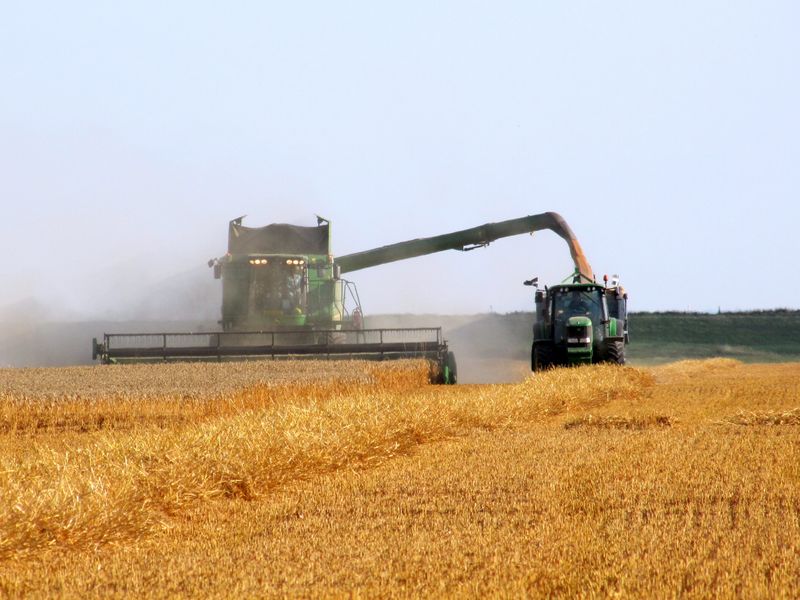
Deere (DE) reports fiscal Q2 2026 earnings today, May 21, with Wall Street expecting EPS of $5.70 on revenue of $11.56 billion. The real story is not the numbers themselves but what they reveal about Deere's aggressive push into autonomous tractors, AI-powered crop monitoring, and precision agriculture. This earnings report will show whether the farm economy's biggest player can turn Silicon Valley technology into real value for farmers battling trade tensions, volatile commodity prices, and unpredictable weather.
Why This Earnings Report Matters More Than Usual
Deere earnings have always been a barometer for the agricultural economy, but the May 2026 report carries extra weight. This is the first full quarter where Deere's next-generation autonomous equipment has been shipping at commercial scale, and investors are desperate to see whether farmers are actually buying the AI pitch or just kicking the tires.
I've been following Deere's technology strategy since they acquired Blue River Technology back in 2017, and what strikes me now is how dramatically the company's identity has shifted. A decade ago, Deere was a tractor company that happened to use some GPS. Today, it's positioning itself as an agricultural AI company that happens to make tractors. That distinction matters enormously for how the market values the stock going forward.
The consensus estimates of $5.70 EPS and $11.56 billion in revenue sit in a cautious zone. Analysts are hedging because the macro picture for agriculture is genuinely complicated right now. Commodity prices for corn, soybeans, and wheat have been volatile. Input costs for fertilizer and fuel remain elevated. And trade tensions have created real uncertainty about export demand. Deere's guidance will be scrutinized more than the actual numbers.
The Autonomous Farm Is No Longer Science Fiction
Here is what most people outside agriculture don't realize: self-driving tractors are not a concept or a prototype. They are working in fields right now. Deere's autonomous tillage and planting systems can operate an entire day without a human in the cab. The farmer monitors operations from a tablet, intervenes when needed, and lets the machine handle the repetitive passes across thousands of acres.
I visited a large-scale corn operation in Iowa last fall that was running two autonomous Deere units simultaneously. The farmer told me something that stuck with me: "I'm not buying a tractor anymore. I'm buying labor that doesn't call in sick, doesn't need overtime pay, and works at 2 AM when conditions are right." That framing captures exactly why Deere's AI strategy has real traction among operators who are struggling with a chronic farm labor shortage.
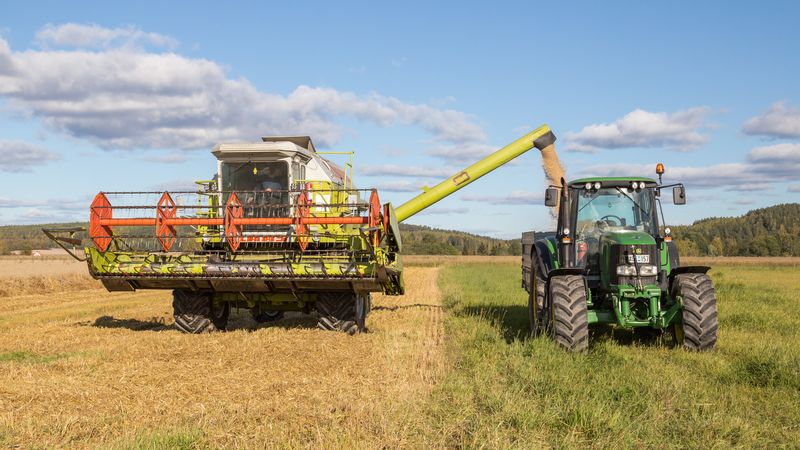
Beyond autonomous driving, Deere's AI crop monitoring platform uses computer vision to identify weeds at the individual plant level and apply herbicide only where needed. The company claims this can reduce chemical usage by up to 70%. That's not just an efficiency gain; it's a sustainability story that resonates with regulators, consumers, and the growing number of farmers who are tired of spraying entire fields when only patches need treatment.
Precision agriculture, the broader category that encompasses variable-rate planting, GPS-guided operations, and data-driven field management, is where Deere is building its moat. The equipment generates data. The data improves recommendations. The recommendations drive loyalty to Deere's ecosystem. It's the agricultural equivalent of the smartphone lock-in effect, and competitors like the tech companies betting on AI chips understand this playbook intimately.
The Headwinds That Could Spoil the Story
For all the excitement about AI tractors and precision agriculture, Deere operates in a sector that is fundamentally at the mercy of forces no algorithm can control. Weather patterns in 2026 have been erratic across the Midwest, with a late spring delaying planting windows in key corn and soybean regions. When farmers miss optimal planting dates, they defer equipment purchases.
Trade tensions add another layer of uncertainty. Agricultural exports to major markets have been disrupted by tariff escalations, and farmers who rely on export revenue are tightening their capital spending. Deere's management acknowledged this in their last earnings call, flagging trade policy as a "significant watch item" for the remainder of fiscal 2026.
Then there is the affordability question. Deere's AI-equipped machinery carries a substantial price premium over conventional alternatives. A fully autonomous tractor setup can cost 30-40% more than its manual counterpart. For large operations farming thousands of acres, the labor savings justify the investment. For mid-size family farms operating on thin margins, the math doesn't always work. This creates a bifurcation in Deere's customer base that investors should watch closely in the earnings commentary.
What I'm Watching in the Earnings Call
The headline numbers matter, but I'll be listening for three specific things in the earnings call. First, what percentage of new equipment orders include autonomous or AI features? This metric tells you whether the technology adoption curve is accelerating or plateauing. Second, what is the recurring revenue run rate from Deere's software and data services? Hardware sales are cyclical, but subscription revenue from precision agriculture platforms could give Deere a more predictable income stream. Third, how is management characterizing the order backlog? If farmers are pulling forward purchases to lock in pricing before potential tariff increases, the backlog could look artificially strong.
The broader agricultural sector has been sending mixed signals. Equipment dealers I've spoken with report strong interest in autonomous features but slower conversion from interest to purchase orders. There's a "wait and see" mentality among farmers who want to know whether the technology delivers on its promises before committing six or seven figures. That hesitancy is rational, and it's something Deere's earnings narrative will need to address convincingly.
What's happening in agriculture mirrors a pattern we're seeing across industries. Just as the World Cup 2026 hotel booking surge shows how major events reshape entire economic sectors, Deere's AI push is restructuring an industry that has operated on the same basic model for a century. The question is whether the transformation happens fast enough to justify the premium investors are paying for the stock.
The Bigger Picture: AI Is Rewriting Agriculture's Future
Regardless of what the earnings numbers show today, the trajectory is clear. Agriculture is becoming a technology-driven industry, and Deere is positioning itself as the platform that connects the physical act of farming to the digital intelligence that optimizes it. The companies that figure out how to make AI accessible and affordable for the average farmer, not just the largest operations, will define the next era of food production.
I think Deere has the right strategy but faces a timing problem. The technology is ready. The value proposition is real. But the farm economy is cyclical, trade policy is unpredictable, and farmers are conservative decision-makers by necessity. The May 2026 earnings report won't resolve that tension, but it will give us the clearest picture yet of whether the agricultural AI revolution is accelerating or still waiting for the right conditions to take root.
Frequently Asked Questions
What are analysts expecting from Deere's May 2026 earnings?
Wall Street consensus estimates for Deere's fiscal Q2 2026 earnings are approximately $5.70 EPS on revenue of $11.56 billion. The key variable is how much revenue comes from Deere's new autonomous and AI-powered equipment lines versus traditional machinery sales.
How is Deere using AI in farming equipment?
Deere has integrated AI across multiple product lines including self-driving tractors that operate without a human in the cab, computer vision systems for real-time crop monitoring and weed detection, and precision agriculture platforms that optimize planting density, fertilizer application, and irrigation based on field-level data analysis.
Are Deere's autonomous tractors available to regular farmers?
Yes, Deere has been rolling out autonomous-capable tractors commercially since 2023. The latest generation offers fully driverless tillage and planting operations. However, adoption is concentrated among large-scale farming operations due to the significant upfront cost premium over conventional equipment.
How are trade tensions affecting Deere's business in 2026?
Trade tensions have created headwinds through higher input costs for steel and components used in equipment manufacturing, and reduced agricultural exports that squeeze farmer income and dampen demand for new machinery. Deere's management has flagged tariff uncertainty as a key risk factor in forward guidance.
Is Deere stock a good investment heading into earnings?
Deere stock carries both opportunity and risk ahead of the May 2026 report. The AI and autonomy narrative provides a long-term growth story, but near-term headwinds from commodity price weakness, trade policy uncertainty, and weather disruptions create volatility. Investors should evaluate their own risk tolerance and time horizon.