.jpg)
How a Single Tiny Octopus Broke an Entire Family Tree
I spend a lot of time reading taxonomy papers (occupational hazard), and I can tell you that most new species descriptions are quiet affairs. A new beetle here, a new frog there. The paper gets published, a handful of specialists nod, and the world moves on. This one is different. Microeledone galapagensis didn't just earn a new name -- it blew up the definition of the family it was placed in.
The Megaleledonidae family had a clean, tidy description that worked for decades: large-bodied, cold-water octopuses found in polar and sub-polar regions. Every known member fit the mold. Then this little blue rebel from the equatorial Pacific showed up and broke every single criterion. It's tiny instead of large. Blue instead of the typical pale tones. And it lives in warm equatorial waters, not the frigid depths near Antarctica.
The researchers had no choice. They had to rewrite the family definition from scratch to accommodate this one animal. That's the taxonomic equivalent of discovering a penguin in the Sahara and having to redefine what "penguin" means.
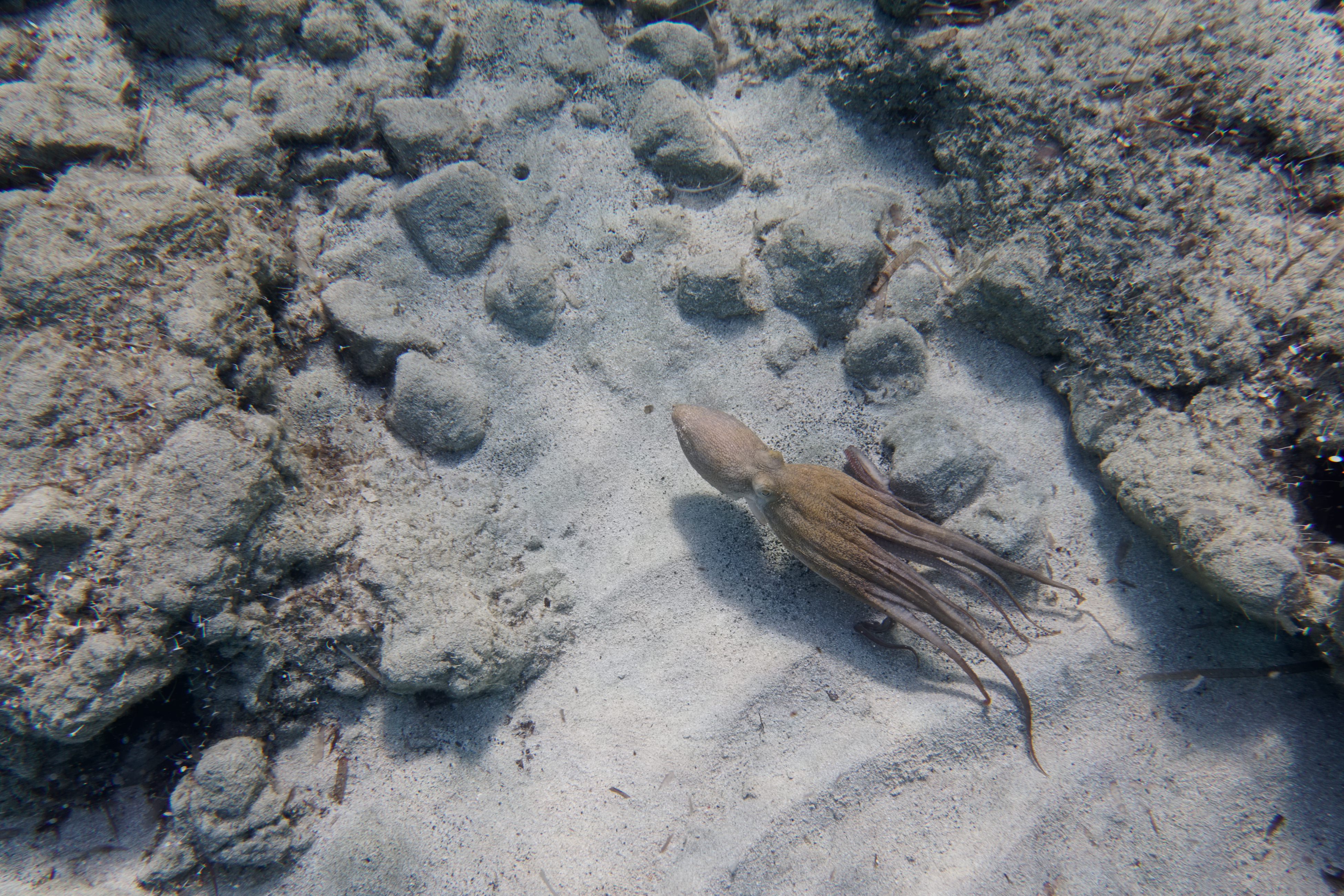
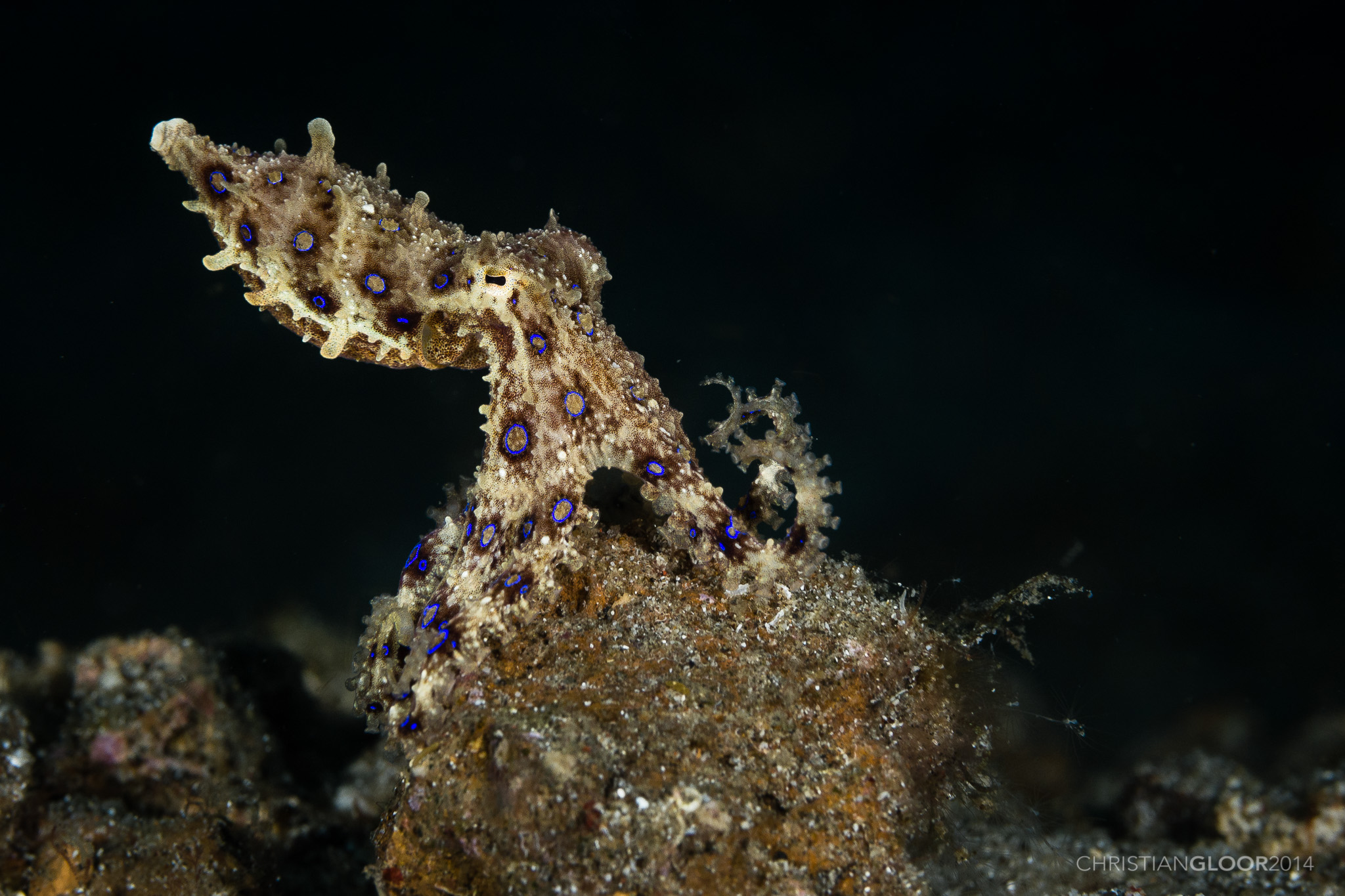
Photo: Ansgar Gruber / CC BY-SA 2.0
.jpg)
The Backstory: First Spotted in 2015, Described in 2026
The specimen was originally collected during a 2015 expedition aboard the E/V Nautilus near Darwin Island, one of the most remote islands in the Galápagos archipelago. ROV cameras captured the animal at 1,773 meters, well within the abyssal zone where sunlight doesn't reach and pressure would crush most surface creatures.
So why did it take over a decade to formally describe? Because the researchers wanted to be absolutely certain. Instead of traditional dissection -- which would have destroyed the only known specimen -- they used CT scanning to map the octopus's internal anatomy in exquisite 3D detail. Every sucker, every gill, every internal organ was documented without making a single cut.
That choice was both practical and philosophical. When you only have one specimen of a potentially groundbreaking species, you don't slice it open. You treat it like the irreplaceable artifact it is.
What Makes This Octopus So Unusual?
Let's break down exactly why Microeledone galapagensis is such an outlier. Every member of the Megaleledonidae family shared three core traits before this discovery: they were large-bodied, they lived in cold polar or sub-polar waters, and they had neutral coloration. This new species violates all three.
First, size. The specimen is roughly the size of a golf ball. Most Megaleledonidae members are significantly larger. Second, color. The distinctive blue pigmentation is unlike anything documented in this family. Third, geography. The equatorial Pacific -- specifically the waters around the Galápagos -- is about as far from polar waters as you can get while still being deep ocean.
Any one of these deviations would have raised eyebrows. All three together forced a fundamental rethinking of what the Megaleledonidae family actually is.
Photo: Diego Delso / CC BY-SA 4.0
,_Anilao,_Filipinas,_2023-08-24,_DD_106.jpg)
Why CT Scanning Changed the Game
The decision to use CT scans instead of dissection isn't just a nice detail -- it's a paradigm shift in how taxonomy gets done. Traditional cephalopod classification relies heavily on dissection: cutting open specimens to examine internal structures like the beak, radula, and reproductive organs. But when you only have one specimen, that's a one-way door.
I've talked to marine biologists who've been pushing for non-destructive methods for years, and this paper is exactly the kind of proof-of-concept they've been waiting for. The CT data was detailed enough to describe the species, place it in a family, and identify the morphological features that forced the reclassification. All without touching a scalpel.
If this approach becomes standard, it could transform how we handle rare deep-sea specimens. And given that we've explored less than 5% of the deep ocean, there are likely thousands of similarly unique species waiting to be found.
What This Means for Deep-Sea Biology
The Galápagos blue octopus is a reminder that the deep ocean is still full of surprises that challenge our existing frameworks. The fact that a single golf-ball sized animal can force the reclassification of an entire family tells us something important: our taxonomic categories are built on incomplete data. We defined the Megaleledonidae based on the species we'd found so far -- and we assumed the pattern would hold. It didn't.
Darwin Island, where the specimen was found, sits at the intersection of several major ocean currents. It's a biological crossroads, and this discovery suggests there may be many more undescribed species hiding in the deep waters around the Galápagos. The E/V Nautilus team has only scratched the surface.