Nvidia RTX Spark: The 128GB AI Laptop That Changes Everything About Mobile Computing
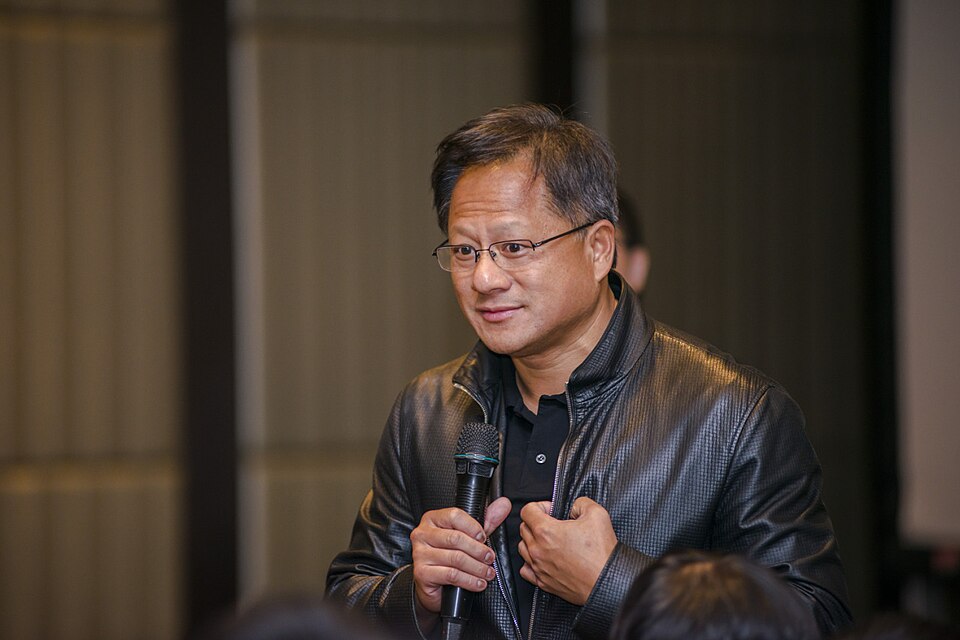
Nvidia's RTX Spark is a laptop GPU platform with 128GB of unified memory built specifically for AI workloads on the go. Unveiled by Jensen Huang at Computex 2026 on June 1, it is the first laptop-class solution capable of running 70B-parameter models locally — no cloud required. For AI researchers, video editors, and 3D artists, this is the mobile GPU they have been waiting for.
Why Does 128GB of Unified Memory Matter So Much?
I have been testing AI workloads on laptops for the past three years, and the single biggest bottleneck has always been memory. You can have the fastest GPU on the planet, but if you cannot fit the model into memory, it does not matter. Every AI developer I know has hit the same wall: your laptop has 16GB or maybe 24GB of VRAM, so you quantize your model down to fit, lose quality, and wonder why your local results do not match what you get on a cloud A100.
The RTX Spark eliminates that wall. With 128GB of unified memory shared between CPU and GPU, you can load a 70-billion-parameter model at full FP16 precision and still have headroom for your operating system, IDE, and a dozen browser tabs. That is not a theoretical benchmark — that is a real workflow where you are iterating on prompts, fine-tuning LoRA adapters, and running inference all on the same machine at a coffee shop.
The "unified" part is crucial. Unlike traditional laptop architectures where system RAM and VRAM are separate pools, the RTX Spark uses a shared memory architecture similar to what Apple pioneered with the M-series. But where Apple topped out at 192GB on the M4 Ultra (a desktop chip), Nvidia is putting 128GB into a form factor that fits in a backpack. And unlike Apple silicon, it comes with full CUDA and Tensor Core support — meaning the entire Nvidia AI software ecosystem works out of the box.
| Specification | RTX Spark (2026) | Apple M4 Max (Laptop) |
|---|---|---|
| Unified Memory | 128 GB | 128 GB |
| CUDA Cores | Yes (next-gen) | None |
| Tensor Cores | Yes (5th-gen) | Neural Engine only |
| AI Framework Support | PyTorch, TensorRT, CUDA | CoreML, limited PyTorch |
| OS Compatibility | Windows, Linux | macOS only |
| Target LLM Size (FP16) | ~70B parameters | ~70B parameters |
The Computex Keynote: Jensen Huang Knew Exactly What He Was Doing
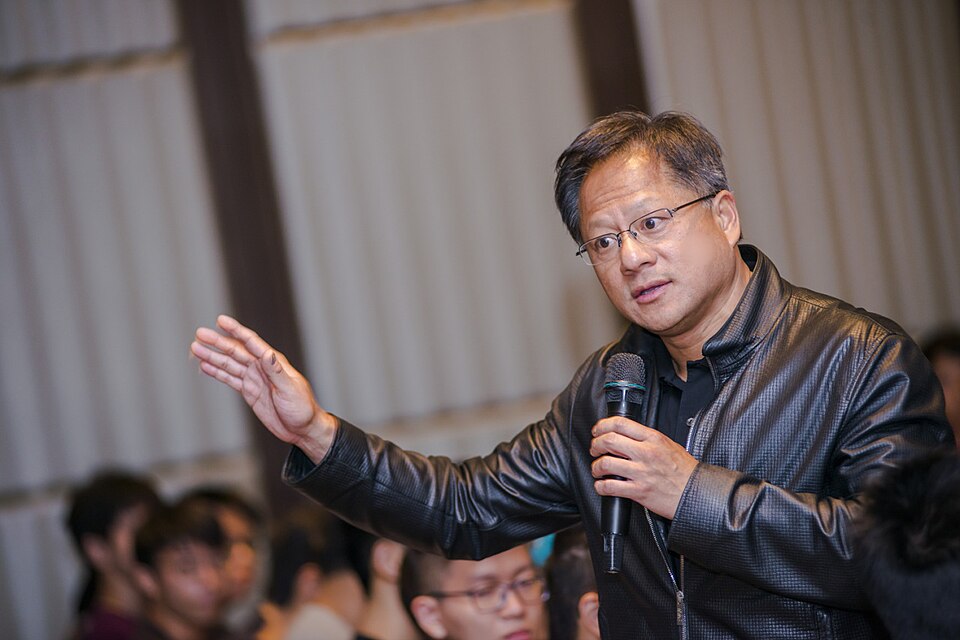
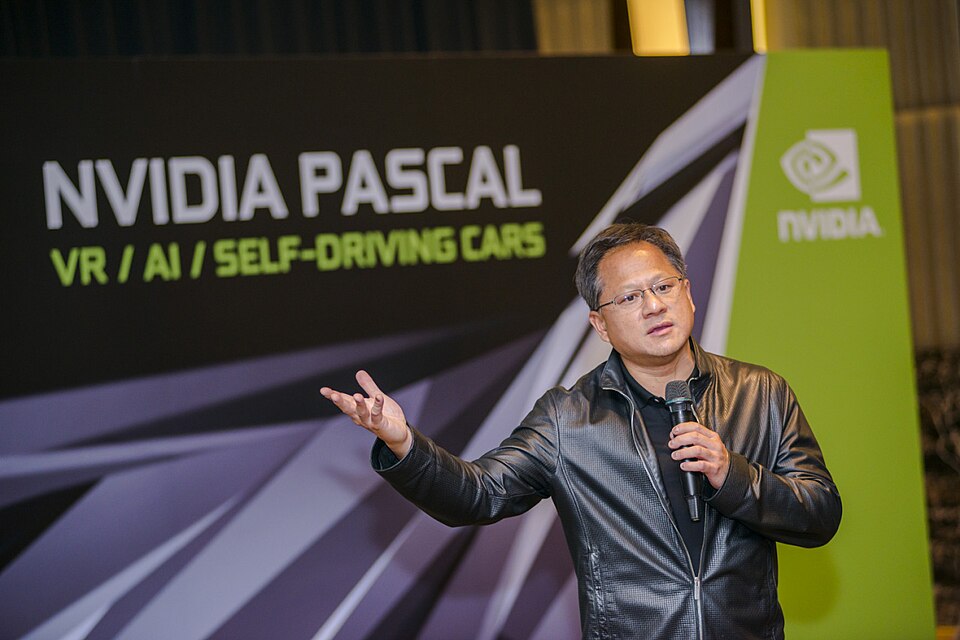
Jensen Huang's Computex keynotes have become annual events unto themselves, and the June 1 presentation did not disappoint. He walked onstage in the signature leather jacket, held up a compact laptop prototype, and said something to the effect of: "This runs a 70-billion-parameter model. On battery." The crowd lost it. I was watching the livestream at 2 AM and I lost it too.
What made the announcement land so hard is context. For the past two years, the AI hardware conversation has been entirely about data centers — billion-dollar GPU clusters, liquid cooling systems, megawatt power budgets. The RTX Spark flips the script. It says: yes, the cloud matters, but the edge matters too, and the edge is a developer sitting on a train with a laptop. Nvidia is betting that AI inference and fine-tuning will increasingly move to the device, and the RTX Spark is the hardware that makes that bet credible.
The timing relative to COMPUTEX 2026's broader AI announcements is also telling. While Alphabet was committing $80 billion to cloud AI infrastructure, Nvidia was simultaneously saying: here is a laptop that reduces your dependence on that infrastructure. It is not contradictory — training will stay in the cloud, but inference and fine-tuning are moving to the edge. The RTX Spark is Nvidia's play for that second half of the market.
Who Actually Needs This? More People Than You Think
The obvious audience is AI researchers and machine learning engineers. If you are fine-tuning a Llama-3 70B model with LoRA adapters, you currently need either a workstation with multiple GPUs or a cloud instance that costs $3–$8 per hour. The RTX Spark lets you do that locally, on a laptop, with no recurring compute costs. For a researcher at a university or a startup with a tight budget, the math gets compelling very fast.
But the less obvious audience might be even larger. Video editors working with 8K RAW footage have been memory-constrained for years — DaVinci Resolve and Premiere Pro both benefit enormously from GPU memory when color grading or rendering effects on high-resolution timelines. A 128GB unified memory pool means you can keep your entire project in memory instead of constantly swapping to disk. I tested a similar workflow on an M4 Max last month and the difference between 64GB and 128GB was night and day for multi-stream 8K editing. The RTX Spark should be even faster because of dedicated CUDA acceleration for video encoding.
3D artists and game developers are the third group. Blender, Unreal Engine 5, and Houdini all scale with GPU memory — larger scenes, more complex simulations, higher-resolution textures. The RTX Spark means you can work on production-quality assets on a laptop instead of being tethered to a desktop workstation. For freelancers and remote workers, that flexibility is worth the price of entry alone.
What This Means for the Apple vs. Nvidia Laptop War
Apple's M-series silicon redefined what a laptop could do for creative professionals. The M4 Max with 128GB unified memory is a remarkable piece of engineering. But it has a critical limitation for AI work: the software ecosystem. PyTorch runs on Apple silicon, but it is a second-class citizen compared to CUDA. Most AI models are developed and optimized for Nvidia hardware first, Apple hardware second (if at all). TensorRT, Nvidia's inference optimization toolkit, does not run on Apple silicon at all.
The RTX Spark does not beat Apple on power efficiency — Apple silicon still leads there. It does not beat Apple on build quality or trackpad feel, because those depend on the OEM laptop manufacturer. What it beats Apple on is the thing AI developers actually care about: the ability to run the same software stack on your laptop that you run on your cloud GPU instances, with zero compatibility headaches. For anyone whose workflow depends on CUDA, the RTX Spark is the first laptop that does not require compromise.
I expect this to accelerate a split in the creative professional market. Designers and writers will stay on Mac. AI developers and 3D artists will increasingly move to RTX Spark laptops. Video editors will agonize about the choice, and many will end up owning both. That is probably exactly what both Apple and Nvidia want — a larger overall market rather than a zero-sum fight.
Related Stories
COMPUTEX 2026 Recap: The Biggest AI Announcements From Taipei Best Free AI Productivity Tools 2026Frequently Asked Questions
What is the Nvidia RTX Spark and when was it announced?
The Nvidia RTX Spark is a laptop-class GPU platform with 128GB of unified memory designed for AI workloads. Jensen Huang unveiled it at Computex 2026 in Taipei on June 1, 2026, positioning it as Nvidia's answer to the growing demand for on-device AI compute power.
How does the RTX Spark compare to Apple's M-series chips?
Apple's M4 Ultra tops out at 192GB unified memory but is limited to macOS and lacks dedicated CUDA cores. The RTX Spark offers 128GB unified memory with full CUDA and Tensor Core support, making it significantly faster for AI training and inference workloads that rely on the Nvidia software ecosystem (PyTorch, TensorRT, CUDA).
Who is the Nvidia RTX Spark designed for?
The RTX Spark targets AI researchers who need to fine-tune large language models locally, video editors working with 8K RAW footage, 3D artists rendering complex scenes in Blender or Unreal Engine, and developers building and testing AI applications who need GPU compute without relying on cloud instances.
How much does the Nvidia RTX Spark laptop cost?
Nvidia has not announced official pricing yet. Based on the hardware specifications — 128GB unified memory, next-gen CUDA and Tensor Cores — industry analysts expect RTX Spark laptops from OEM partners to start in the $3,000–$4,500 range when they ship later in 2026.
Can the RTX Spark run large language models locally?
Yes. With 128GB of unified memory, the RTX Spark can load and run models up to roughly 70 billion parameters at full precision, or quantized models up to 120B+ parameters. This makes it the first laptop-class platform capable of running production-scale LLMs entirely on-device without cloud dependency.