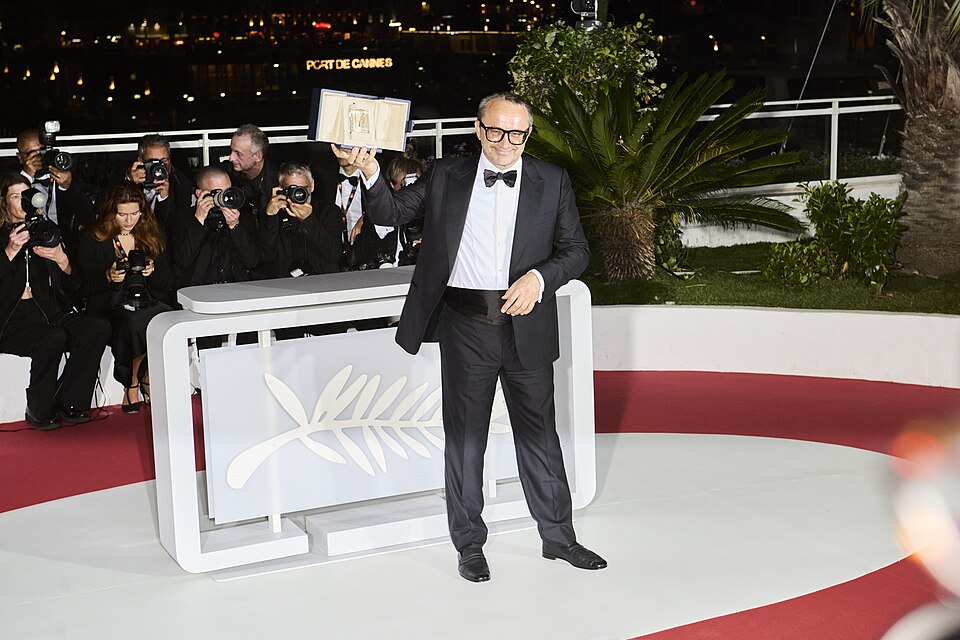
A Filmmaker Who Refuses to Make Things Easy
I'll say it plainly: I love this choice and I understand why a lot of people hate it. Cristian Mungiu has never been interested in making comfortable cinema. His 2007 Palme winner was a harrowing abortion drama set in Ceausescu's Romania. Nearly two decades later, he's made something just as unflinching — a film about institutional power, religious conviction, and the impossible space where those two forces collide. Fjord is not the kind of movie you enjoy. It's the kind of movie that stays with you for weeks whether you want it to or not.
The fact that it took him 19 years to come back for a second Palme matters. Mungiu has been quietly making excellent films in the interim — Beyond the Hills, Graduation, R.M.N. — all of which competed at Cannes without taking the top prize. The consistency of his vision is almost stubbornly admirable. He doesn't chase trends. He doesn't adapt his style to whatever mood the festival circuit is rewarding that year. He just keeps making Mungiu films, and this time, the jury said yes again.
Sebastian Stan and Renate Reinsve Are Extraordinary
Let me talk about the performances, because they're what elevate Fjord from a well-crafted sociopolitical drama into something genuinely shattering. Sebastian Stan — yes, the Winter Soldier, the guy from The Apprentice — delivers the performance of his career as a Romanian father whose evangelical faith puts him at odds with Norwegian child welfare authorities. There's a scene in the second act where his character tries to explain his beliefs in a custody hearing, and Stan plays it with such devastating sincerity that you feel the room's temperature drop.
Renate Reinsve, who broke out in The Worst Person in the World, plays the Norwegian social worker assigned to the family's case. Mungiu does something brilliant with her character: she's not a villain. She genuinely believes she's protecting children. The film refuses to let you hate her, and it refuses to let you fully sympathize with her either. That ambiguity is what's dividing critics — people want clear moral sides, and Fjord won't give them that satisfaction.

Park Chan-wook's Jury Made a Statement
Park Chan-wook leading this jury felt significant from the moment it was announced. Park has always gravitated toward films that explore moral complexity without providing easy resolutions — think Oldboy, Sympathy for Mr. Vengeance, Decision to Leave. He's a filmmaker who trusts audiences to sit with discomfort. Of course he would champion a film like Fjord.
The jury reportedly deliberated for over six hours before reaching their decision. That tells you something about how contested this was even among the jurors themselves. Some critics are calling it a bold, uncompromising choice. Others say it's a confusing one, given that several other competition films — including the crowd-favorite Brazilian entry and a formally dazzling Japanese feature — seemed like safer consensus picks. But Park doesn't do safe consensus, and neither does Mungiu.
Neon's Streak Is Getting Ridiculous
Here's a stat that genuinely amazes me: Neon has now distributed seven consecutive Palme d'Or winners. Seven. Starting with Parasite in 2019, through Titane, Triangle of Sadness, Anatomy of a Fall, Anora, and now Fjord. That's not luck — that's a company with an almost supernatural instinct for backing the films that Cannes juries will reward. Tom Quinn and his team have turned Neon into the go-to home for Palme-caliber auteur cinema.
What this means for Fjord's commercial prospects is interesting. Neon has proven they can turn Palme winners into cultural events — Parasite became a billion-dollar phenomenon, and Anatomy of a Fall was a genuine mainstream hit. Will Fjord follow that path? I'm less sure. It's a harder sell than those films. It's slower, more austere, more uncomfortable. But the Sebastian Stan factor gives it a built-in audience that previous Mungiu films never had. The Marvel fanbase discovering Romanian art cinema is going to be a cultural moment, one way or another.

Why the Division Is the Point
The criticism I keep seeing — that Fjord is "unclear in its allegiances," that it "doesn't pick a side" — is exactly what makes it great cinema. Real moral dilemmas don't have obvious answers. A family that loves their children but disciplines them according to religious convictions that a secular state considers abuse — who is right? The film says: that's not the right question. The right question is what happens to the children caught in the middle, and that answer is devastating regardless of which side you take.
Mungiu has said in interviews that he drew on real cases from Norway's Barnevernet system, where immigrant families — particularly from Eastern Europe — have had children removed based on cultural misunderstandings about discipline. It's a powder keg of a subject: religious freedom vs. child welfare, immigrant communities vs. state institutions, collectivist family structures vs. individualist child rights frameworks. The film doesn't flatten any of that complexity, and I respect it enormously for that refusal.
The Awards Season Implications
Let me put on my predictions hat for a moment. Fjord is going to be a serious Best Picture contender at the Oscars. The Palme d'Or has become an increasingly reliable Oscar precursor — Parasite won both, Anatomy of a Fall was nominated, Anora took Best Picture last year. Mungiu's film has the added advantage of being in English (mostly), starring recognizable international talent, and dealing with themes that American audiences can relate to viscerally.
Sebastian Stan should start clearing space for a Best Actor nomination. The performance demands it. And if Neon runs their campaign the way they ran Anora's — focused, passionate, treating the director as an auteur rather than a prestige commodity — this could go very far. My gut says Fjord will be polarizing with general audiences just as it was with critics. But the right kind of polarizing can fuel an Oscar campaign. People talk about films that make them argue.